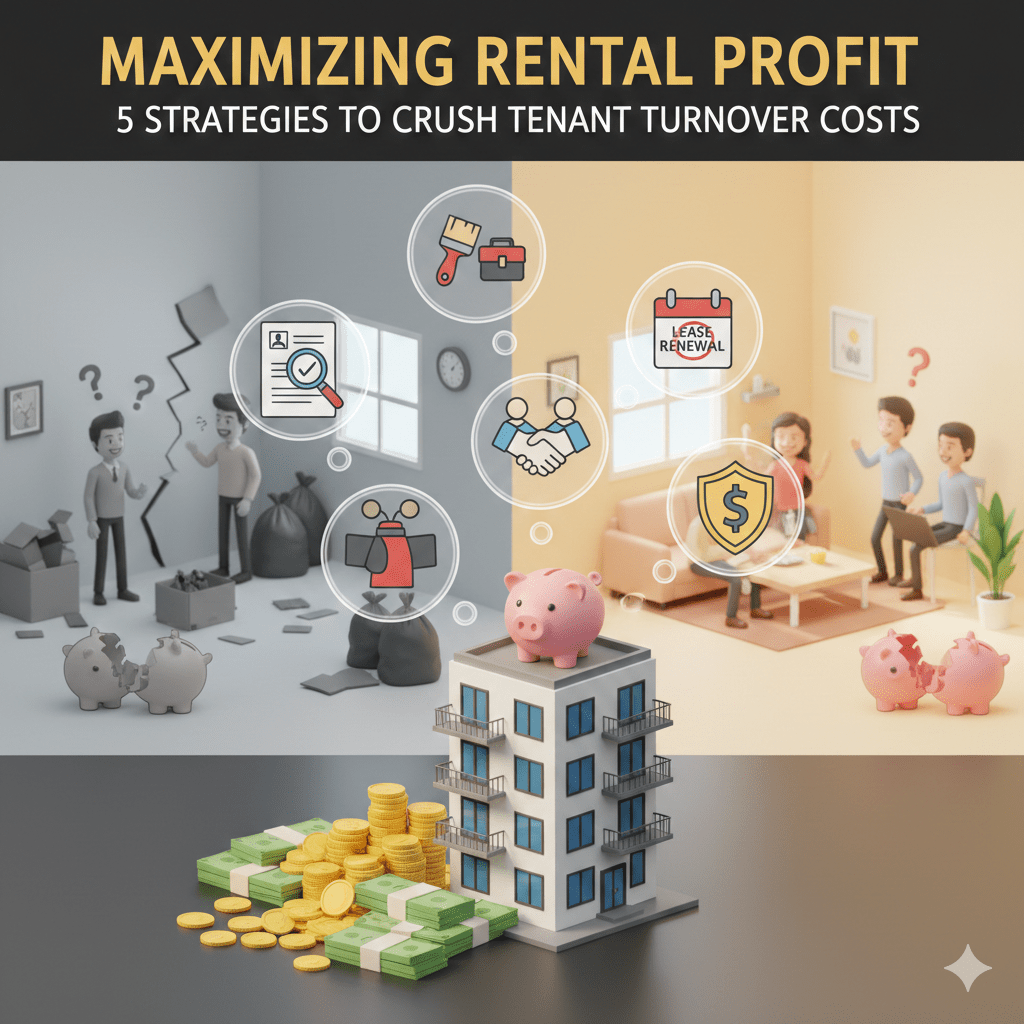
In the highly competitive Southern California market, the primary challenge for landlords has shifted from securing tenants to retaining them. For investors operating in Orange County, every day a unit sits vacant or requires costly repairs due to move-out is money lost—a loss that can easily reach $3,500 to $5,000 per turnover event.
The solution is a proactive, customer-centric property management approach. By treating high-quality tenants as valuable long-term clients, you stabilize cash flow and protect your Net Operating Income (NOI) against rising costs.
1. The True Financial Cost of Tenant Turnover
Many self-managing landlords underestimate the total cost of a vacancy. The figure goes far beyond the single month of lost rent.
Breakdown of Turnover Costs (Estimate per unit in OC):
- Lost Rent (Vacancy): 2–4 Weeks (The biggest variable).
- Cleaning & Painting: $500 – $1,000
- Repairs & Maintenance: $1,500 – $3,000 (Patching, carpet cleaning, fixture repair).
- Re-Leasing & Marketing Fees: $500 – $1,500 (Photography, online listings, broker fees).
- Total Estimated Cost: $3,500 – $5,000 (Per occurrence)
In Orange County, every 1% of vacancy across a portfolio can cost an investor approximately $2,400 per 10 units each month in unrealized rent. Therefore, the goal must be retention first, even when rents are capped by AB 1482.
2. Proactive Maintenance as a Retention Tool
Maintenance should be viewed not as an expense, but as an investment in tenant goodwill. Prompt, professional maintenance is the single most important factor in driving lease renewals.
- Implement a 24-Hour Response Standard: Establish a clear policy to acknowledge all non-emergency maintenance requests within 24 hours. The repair itself can take longer, but swift acknowledgment shows tenants they are valued.
- Scheduled Prevention: Adopt a seasonal maintenance calendar (e.g., HVAC service in spring, gutter cleaning in fall). This prevents minor issues from becoming costly emergencies and signals to the tenant that the landlord cares about asset quality.
- Leverage Technology: Use a tenant portal or app for all requests. This system creates a documented history for both parties, streamlines communication, and prevents complaints from escalating.
3. The 90-Day Renewal Incentive Strategy
Lease renewal discussions should never be a last-minute surprise. Start the conversation early—ideally 90 to 120 days before the lease expires.
- Strategic Rent Increases: In California, rent increases are capped (5% + CPI, max 10% under AB 1482). Use this cap strategically: Offer modest, predictable increases (3–5%) rather than maximizing the cap. Predictable pricing reduces tenant shock and makes budgeting easier, encouraging them to stay.
- Tiered Incentives: Create a menu of non-monetary incentives for renewals:
- Tier 1 (Standard Renewal): Complimentary professional carpet cleaning.
- Tier 2 (Long-Term Renewal – 18+ Months): A small appliance upgrade (new microwave) or free accent wall painting.
- Tier 3 (Short-Term Concession): A slight rent discount for a month, which is far cheaper than losing two months of rent to vacancy.
4. Rigorous Screening to Filter for Stability
The best defense against high turnover is thorough screening. Focus on tenants who prioritize stability over chasing a better deal.
- The 3x Income Rule: Require applicants to demonstrate verifiable gross monthly income of at least three times the rent. This exceeds the standard 2.5x rule and ensures financial reliability in a high-cost market.
- Go Beyond the Score: While credit score matters, prioritize Rental History Verification. Contact previous landlords (not just the current one) to confirm payment consistency, property care, and reason for moving.
- Apply Consistent Criteria: Establish clear, written, non-discriminatory standards for all applicants. Professional consistency protects the investor from legal liability and streamlines the selection process.
5. Leveraging Property Upgrades for Rent Premiums
To compete and justify rent increases under a stabilized market, you must constantly enhance the property’s value proposition.
- High-Impact, Low-Cost Upgrades: Focus on upgrades that tenants prioritize: Modern light fixtures, keyless entry systems, or updated kitchen hardware.
- Prioritize Parking: In crowded areas (like Santa Ana or West Huntington Beach), dedicated or reserved parking is a premium amenity. If you can provide a dedicated spot, market it aggressively, as it helps justify a higher monthly rent.
- Pet Policies: With nearly 60% of renters owning pets, consider implementing a responsible, pet-friendly policy (requiring pet rent and higher security deposit). This broadens the qualified applicant pool and reduces vacancy time significantly.
Key Focus: In Orange County, successful property management pivots from transaction-based renting to relationship-based retention. By investing in the tenant experience, you fix the costly turnover problem and convert volatile income into predictable revenue.

Kurt Galitski- Principal, Broker
(949) 688 7705 | DRE #: 01348644
2919 Newport Blvd, Newport Beach, CA 92663
DISCLAIMER: This article is for informational and educational purposes only and is based on publicly available data from official state and county sources. We are NOT tax professionals, financial advisors, CPAs, or attorneys. The information provided does not constitute legal, tax, or financial advice.