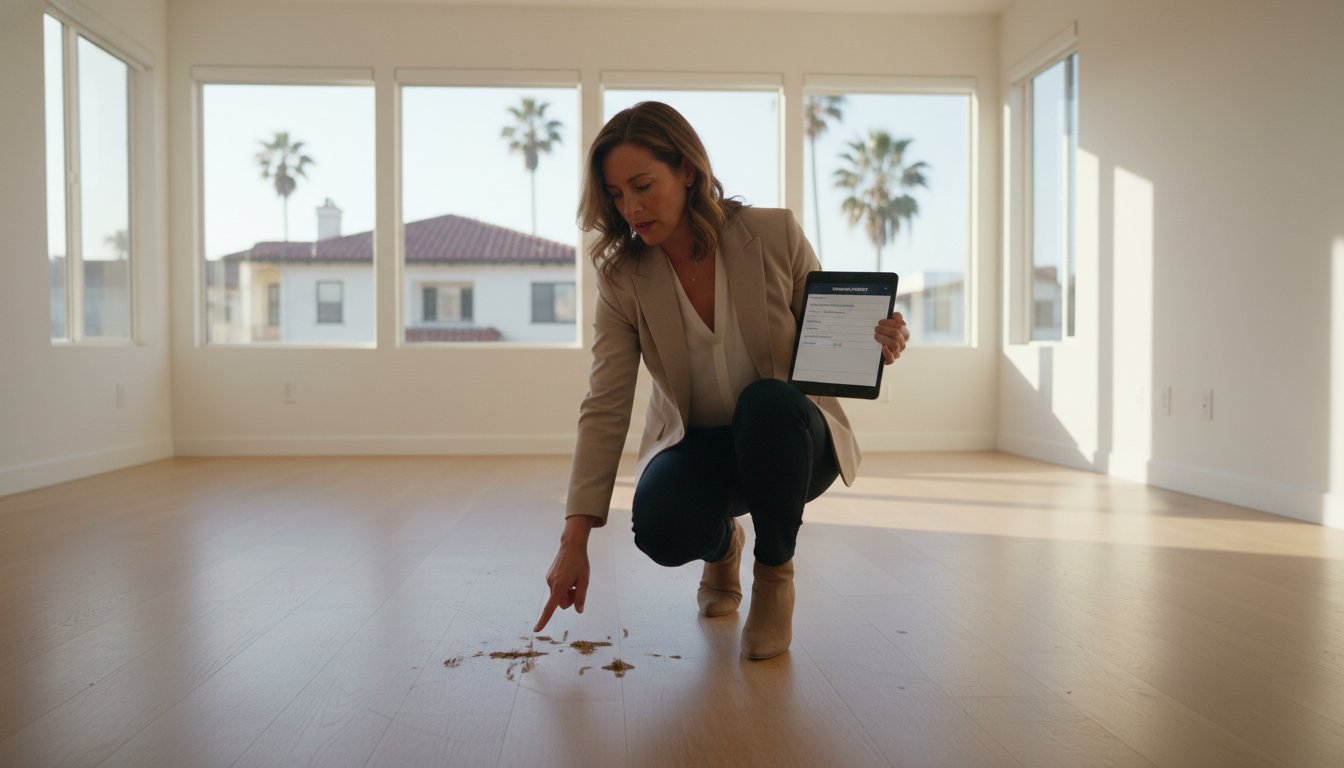
You walk into your Huntington Beach rental after a move-out only to find deep gouges in the hardwood and a broken refrigerator. It’s a gut-punch that immediately triggers concerns about repair costs and California’s complex legal landscape. Knowing exactly what to do if a tenant damages property Huntington Beach is the difference between a total financial loss and a protected investment.
It’s natural to feel that the legal system is stacked against you, especially with the constant updates to state regulations. You want to protect your asset without the stress of a potential lawsuit or a long-drawn-out confrontation. We understand that your property isn’t just a building; it’s a critical part of your financial future that deserves professional defense and meticulous oversight.
This guide provides the exact 2026 legal framework and professional strategies you need to recover repair costs while staying fully compliant with the latest state mandates. We’ll walk you through the mandatory timestamped photo requirements, the 21-day itemized statement deadline, and the new rules for electronic security deposit refunds to ensure your interests remain secure.
Key Takeaways
- Learn to distinguish between “normal wear and tear” and actual damage to ensure your deductions remain legally defensible under California Civil Code §1950.5.
- Master the specific legal sequence of what to do if a tenant damages property Huntington Beach, including adhering to 2026 security deposit limits and strict notification timelines.
- Discover how to document property condition using timestamped photos and itemized statements to meet the latest California transparency requirements.
- Understand the strategic balance between utilizing security deposits and filing landlord insurance claims to recover repair costs without overextending your budget.
- Establish a protective barrier for your investment through professional tenant screening and proactive inspections that identify issues before they become costly repairs.
Defining Property Damage vs. Normal Wear and Tear in Huntington Beach
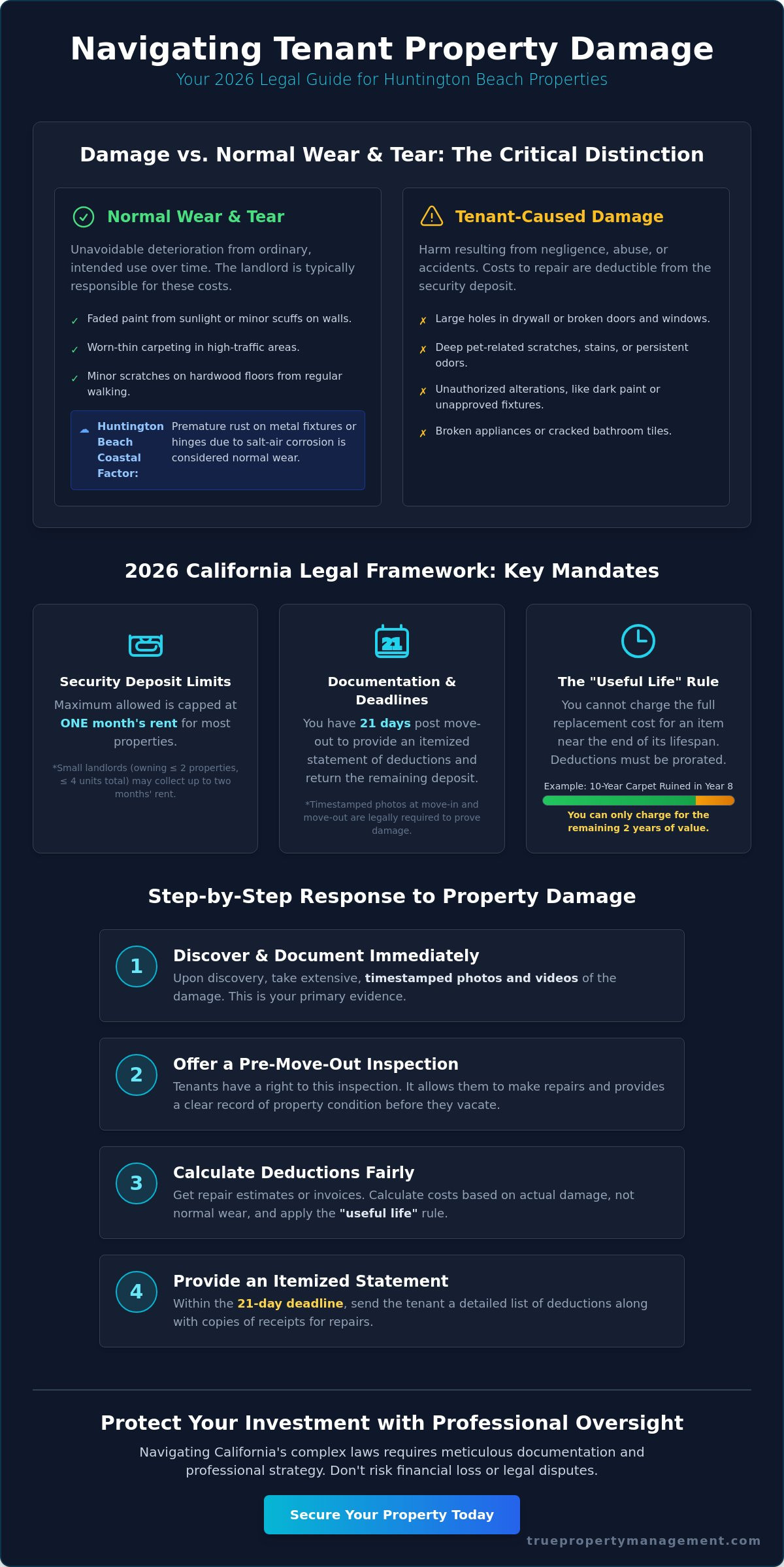
Distinguishing between natural aging and actual damage is the cornerstone of protecting your investment. Under California Civil Code §1950.5, “normal wear and tear” is defined as the unavoidable deterioration that occurs through the ordinary use of a rental unit. If you are evaluating what to do if a tenant damages property Huntington Beach, you must first determine if the issue is a result of time or a result of neglect. Natural wear includes things like faded paint from the sun or minor scuffing on floorboards. In contrast, tenant-caused damage involves broken appliances, large holes in walls, or deep carpet stains that require replacement rather than a simple cleaning.
Documentation serves as your primary defense in any security deposit dispute. Effective January 2026, California law requires landlords to provide timestamped photos documenting the property’s condition at move-in and move-out. Without these visual receipts, proving that a tenant caused specific harm becomes nearly impossible under landlord-tenant law. We view these records as a protective barrier that ensures financial clarity for both parties and maintains the integrity of your financial reporting and accounting. This disciplined approach prevents small disputes from escalating into costly legal hurdles.
The concept of “useful life” is also critical when calculating deductions. You cannot charge a tenant for the full replacement cost of an item that was already near the end of its expected lifespan. For example, if a carpet is rated for ten years and the tenant ruins it in year eight, you can only charge for the remaining two years of value. This ensures that your maintenance and repair coordination remains ethically sound and legally compliant. It also protects you from claims of “bad faith” deductions in small claims court.
The Huntington Beach Coastal Factor
Living near the water introduces unique environmental stressors that inland properties don’t face. Salt-air corrosion can cause metal fixtures, door hinges, and window tracks to seize or rust prematurely. This is typically considered normal wear and tear for a beach-side rental. However, if a tenant leaves windows open during a storm or fails to report a leak that leads to mold in our humid climate, that neglect crosses the line into damage. The constant exposure to salt spray and high humidity in Huntington Beach drastically reduces the useful life of exterior hardware and paint compared to inland Orange County homes.
Common Examples of Tenant-Caused Damage
- Structural Harm: Large holes in the drywall, broken doors, or cracked windows are clear instances of damage. Small nail holes from hanging pictures are generally considered wear and tear.
- Pet-Related Issues: Scratched baseboards, chewed cabinets, or deep-set odors and stains in the flooring are the tenant’s responsibility to rectify.
- Unauthorized Alterations: If a tenant paints the walls a dark color or installs permanent fixtures without written consent, the cost to restore the property to its original condition is a valid deduction.
By understanding these distinctions, you can approach the recovery process with confidence. It’s about being fair but firm, ensuring your property maintains its value through rigorous standards and professional oversight. This clarity allows for a high-level partnership between owner and manager, focused entirely on your long-term financial success.
California Legal Framework for Property Damage Claims in 2026
California’s legislative environment has shifted significantly for 2026, requiring property owners to be more precise than ever. If you are determining what to do if a tenant damages property Huntington Beach, you must first align with the current security deposit caps. For most residential properties, the maximum security deposit is now limited to one month’s rent. Small landlords, defined as natural persons or specific LLCs owning no more than two properties with a total of four units, may still collect up to two months’ rent under California Civil Code §1950.5. Staying within these bounds is your first step in maintaining California landlord tenant law compliance.
Tenants also possess the right to a “pre-move-out inspection.” This allows them to identify and potentially repair damage before they vacate. You must notify them of this right in writing. If they request it, you’ll walk through the unit together and provide an initial list of required repairs. This transparency reduces surprises and fosters a high-level partnership between both parties. This process is a core component of our Legal Compliance and Risk Management services, ensuring you never face a dispute unprepared.
The 21-Day Rule and Itemized Deductions
The clock starts the moment the tenant vacates. You have exactly 21 calendar days to return the deposit or provide an itemized statement of deductions. This statement must now include timestamped photos of the damage before repairs and after they are completed, as required by Assembly Bill 2801. If your repairs exceed $125, you must include copies of invoices or receipts. If work isn’t finished within the 21-day window, you can provide a good-faith estimate, then follow up with final receipts within 14 days of completion.
Missing this deadline can lead to “bad faith” claims, where a judge might award the tenant twice the amount of the deposit in damages. Additionally, effective January 1, 2026, Assembly Bill 414 requires that if you received rent payments electronically, you must return the deposit refund electronically to an account designated by the tenant. This level of technical detail is why professional oversight is so valuable; we act as a protective barrier between you and these logistical burdens.
Required Disclosures and Notices
Compliance begins with your lease agreement. It should clearly outline the definitions provided by California landlord-tenant law to set expectations early. If damage occurs mid-lease, you don’t have to wait until move-out. You can legally document and serve a “Cure or Quit” notice if the damage violates the lease terms. This requires the tenant to fix the issue within a specific timeframe or face potential eviction coordination.
Properly serving these notices is vital to protecting your investment. Whether it’s a notice of entry for an inspection or a demand for repairs, every step must be documented and served according to state law. This disciplined approach ensures you remain in control of your operations while providing the security and peace of mind you deserve. Knowing exactly what to do if a tenant damages property Huntington Beach ensures your financial success isn’t derailed by a single problematic tenancy.
Step-by-Step Response: From Discovery to Repair
Discovering damage is a high-stress moment for any property owner. Knowing exactly what to do if a tenant damages property Huntington Beach starts with a disciplined, immediate assessment. If the tenant still occupies the unit, you must respect privacy laws by providing a 24-hour notice of entry before inspecting the damage. Once inside, remain objective. Your goal is to gather facts, not to engage in a confrontation. Maintaining a professional, non-confrontational tone during this initial phase sets the stage for a smoother resolution and protects you from claims of harassment.
Your communication strategy should be rooted in clarity and openness. We recommend sending a formal summary of the findings to the tenant immediately after the inspection. This creates a paper trail that is essential for our Legal Compliance and Risk Management protocols. By treating the situation as a logistical hurdle rather than a personal slight, you preserve the professional nature of the relationship while moving toward financial recovery. This approach ensures your investment remains a source of success rather than a source of stress.
Professional Documentation Standards
The “Before and After” rule is your most powerful tool in any dispute. You must compare current photos against the move-in checklist and high-resolution images captured at the start of the lease. In 2026, standard photos aren’t enough; we utilize high-definition video walkthroughs to capture the scale and context of the damage. Utilizing a neutral, third-party inspection report is superior to landlord-taken photos because it provides an unbiased, professional layer of veracity that holds up better in small claims court. This level of detail acts as a protective barrier between your assets and potential legal challenges.
Coordinating Repairs in Orange County
Once the damage is documented, you need to find reliable contractors who understand the Huntington Beach market. Vetting contractors for high-quality, defensible repair estimates is critical. You don’t just want the cheapest fix; you want a restoration that maintains the property’s long-term value. Our Maintenance and Repair Coordination team prioritizes vendors who provide detailed, itemized invoices that clearly distinguish between labor and materials. This transparency is vital for your Financial Reporting and Accounting records.
Timing is also a factor. You must balance the need for “emergency repairs,” such as a broken window that compromises security, with “tenant-responsible” timelines for non-essential damage. For specialized issues like mold or structural damage common in coastal environments, always hire certified specialists. Tracking every dollar spent on restoration ensures that when you finally reconcile the security deposit, your deductions are backed by concrete financial evidence. This disciplined process reflects the high-level partnership we provide to every property owner we serve.
Handling Financial Recovery and Insurance Claims
Once the physical restoration of your property is underway, your focus must shift toward financial recovery. Navigating the costs of significant repairs requires a strategic approach to ensure your investment remains profitable. When determining what to do if a tenant damages property Huntington Beach, you’ll often face a choice between direct billing, security deposit deductions, or filing an insurance claim. Each path has distinct implications for your long-term returns and your relationship with the tenant.
Our methodology prioritizes financial clarity through detailed Financial Reporting and Accounting. By maintaining precise records of every repair expense, you create a defensible position for any recovery action. This disciplined oversight acts as a protective barrier, ensuring that you aren’t left absorbing the costs of someone else’s negligence. We aim to move you through this process with the calm confidence that your capital is being shielded effectively.
Security Deposits vs. Out-of-Pocket Billing
With the 2026 security deposit limit for most residential properties capped at one month’s rent, major damage can easily exceed the funds you hold. If the repair costs surpass the deposit, you must bill the tenant directly for the balance. For tenants who are staying in the unit, a pragmatic payment plan can be an effective way to recover costs while maintaining a stable tenancy. It’s also vital to consider how property management fees factor into your overall budget. Professional management ensures that billing is handled with the appropriate legal notices, reducing the risk of a “bad faith” counter-claim from the tenant.
Navigating Insurance and Liability
Landlord insurance is a critical safety net, but it isn’t always the right first step for minor damage. You must evaluate the “Deductible vs. Damage” ratio before filing a claim. If a repair costs $3,000 and your deductible is $1,500, the resulting payout might not justify the potential increase in your future premiums. Most landlord policies also exclude “gradual” damage, such as a slow leak the tenant failed to report. In these cases, leveraging the tenant’s renters insurance is often the more efficient route for covering accidental damage like kitchen fires or sudden overflows.
Protecting your maximize rental income goals requires a proactive stance on liability. We require tenants to maintain liability insurance to ensure that major incidents don’t become a total financial loss for the owner. If a tenant vacates and refuses to pay for damages exceeding the deposit, Small Claims Court is a final option. In California, individuals can sue for up to $12,500, while businesses are limited to $6,250. This legal path is often worth the time for Huntington Beach owners when the documentation is airtight and the financial stakes are high.
If you’re currently dealing with a damaged unit and need professional assistance with recovery, our team can help you navigate the complexities of Maintenance and Repair Coordination and financial restoration. Contact us today to secure your investment’s future.
Preventing Future Damage with True Property Management
While knowing what to do if a tenant damages property Huntington Beach is vital for immediate recovery, the most effective strategy is to prevent damage before it ever occurs. Our proprietary management approach focuses on creating a protective barrier between you and the inherent risks of property ownership. We replace the stress of reactive repairs with a disciplined system of proactive management and clear expectations. This high-level partnership ensures your investment remains secure and profitable while shielding you from the logistical burdens of tenant neglect.
Clear lease agreements are the foundation of this prevention strategy. From day one, we set explicit expectations for maintenance and care, ensuring tenants understand their responsibilities regarding the property’s condition. By establishing these boundaries early, we foster an environment of mutual respect and financial clarity. This intentional methodology is designed to provide the security and peace of mind you deserve, allowing you to focus on your long-term investment goals without the distraction of avoidable property damage.
The Value of Expert Tenant Placement
Rigorous tenant screening is your first and most critical line of defense. We look beyond basic credit scores to identify a genuine “pride of rentership” in an applicant’s history. By verifying past landlord references and assessing how previous residences were maintained, we significantly reduce the likelihood of future property abuse. Professional placement preserves asset value by matching your property with individuals whose history demonstrates a consistent pattern of financial responsibility and physical care for their residence.
Proactive Oversight and Maintenance
Catching minor issues before they escalate into major damage requires consistent, professional oversight. We schedule routine walk-throughs to verify lease compliance and ensure the property is being cared for according to our high standards. These visits aren’t just about enforcement; they help us build a high-trust relationship with the tenant. When tenants feel respected and supported, they’re much more likely to report a small leak or accidental damage immediately rather than hiding it until move-out. This open dialogue is essential for maintaining the property’s integrity and your financial success.
The most reliable property management companies in orange county act as a vital buffer against tenant conflict. We handle the difficult conversations and the technical logistics of Maintenance and Repair Coordination, ensuring that every task is performed by vetted, high-quality professionals. Ultimately, understanding what to do if a tenant damages property Huntington Beach is just one part of a larger, more comprehensive strategy. By choosing a partner focused on efficiency and transparency, you can rest assured that your Huntington Beach property is in the hands of disciplined experts dedicated to your success.
Securing Your Huntington Beach Legacy
Managing a rental in a coastal environment requires more than just a signed lease; it demands a high-level partnership rooted in legal precision and proactive care. You now have the roadmap to navigate the 21-day statutory deadline and distinguish salt-air corrosion from actual neglect. Knowing exactly what to do if a tenant damages property Huntington Beach ensures your financial returns aren’t eroded by avoidable disputes or legislative missteps.
True Property Management acts as a protective barrier between you and these logistical burdens. We safeguard your assets through our Rigorous 10-Point Tenant Screening and Detailed Move-In/Move-Out Documentation. Our 24/7 Emergency Maintenance Coordination provides the security and peace of mind you deserve, allowing you to focus on your financial success while we handle the technical details.
You’ve worked hard to build your investment. We’re here to ensure it remains a stable, thriving asset for years to come. Protect your Huntington Beach investment with True Property Management and experience the clarity of professional oversight.
Frequently Asked Questions
Can I deduct for carpet cleaning if the tenant was there for five years?
You generally cannot deduct for professional carpet cleaning after a five-year tenancy, as this typically marks the end of the carpet’s “useful life” under California guidelines. Unless there is specific damage like large burns, permanent stains, or pet-related destruction, refreshing the flooring is considered a standard turnover cost. Charging for natural deterioration after half a decade often leads to “bad faith” claims in court.
What happens if the damage costs more than the security deposit?
If repair costs exceed the deposit, you must still provide an itemized statement within 21 days and then bill the tenant for the remaining balance. If the tenant refuses to pay, you can pursue the debt through Small Claims Court. For Huntington Beach property owners, individuals can sue for up to $12,500, while businesses or LLCs are limited to $6,250 per claim.
Do I need to provide receipts for every deduction in California?
You are required to provide copies of receipts or invoices for any deductions that total more than $125. If the repairs aren’t finished within the 21-day window, you can provide a good-faith estimate. You then have 14 days after the work is completed to provide the final receipts. This level of transparency is a core part of our Legal Compliance and Risk Management protocols.
Can I charge a tenant for “unauthorized” painting or wall changes?
You can charge the tenant for the cost to restore the walls to their original condition if they painted without your written consent. While minor scuffs are wear and tear, a complete color change is a lease violation. The deduction must be prorated based on the age of the existing paint to ensure you aren’t overcharging for an item that was already due for a refresh.
How do I handle damage discovered after the 21-day refund window?
Once the 21-day window has closed, you lose the legal right to deduct from the security deposit. However, you can still pursue the former tenant for the cost of repairs through a separate civil lawsuit. This highlights why we emphasize immediate, high-resolution documentation; knowing exactly what to do if a tenant damages property Huntington Beach requires acting before these strict legal deadlines expire.
Is a tenant responsible for damage caused by a guest or a pet?
Tenants are legally responsible for any damage caused by their guests, pets, or anyone they allow onto the property. Whether it’s a broken window from a visitor or scratched baseboards from a dog, the leaseholder is the party held financially accountable. We mitigate these risks through our Rigorous 10-Point Tenant Screening, which identifies high-quality renters with a history of responsible property care.
Can I use the security deposit for unpaid rent AND property damage?
You can legally use the security deposit to cover both unpaid rent and physical damage beyond normal wear and tear. California Civil Code §1950.5 specifically allows for these deductions. Our Financial Reporting and Accounting systems ensure that these funds are applied correctly and documented clearly, providing a protective barrier against potential disputes from departing tenants.
What is the “useful life” of interior paint in a Huntington Beach rental?
The standard useful life for interior paint is generally two to three years. In Huntington Beach, the coastal air and humidity can impact surface longevity, but judges still typically expect owners to repaint at their own expense after a three-year tenancy. If damage occurs before this period ends, you can only charge the tenant a prorated amount based on the remaining months of the paint’s expected life.