Table of Contents
- Why Water Damage Becomes Your Financial Nightmare as an Orange County Landlord
- The Hidden Costs of Frozen Pipes and Leaks in Vacant Properties
- How Professional Water Shutdown Services Protect Your Investment
- Our Comprehensive Water Shutdown and Property Protection Process
- Real-Time Monitoring and Emergency Response When You're Away
- Preventing Tenant Disputes and Insurance Claims Through Proper Protocols
- The True Property Management Difference in Vacant Property Care
- Seasonal Preparation: Getting Your Rental Ready Before Extended Vacancy
- Coordinating Water Shutdowns With Our Full Property Management Services
- Peace of Mind With Professional Oversight and Documentation
- Next Steps: Protecting Your Rental Property From Water-Related Losses
- Frequently Asked Questions (FAQ)
Why Water Damage Becomes Your Financial Nightmare as an Orange County Landlord
Water damage is one of the fastest ways a vacant property can drain your profits. A single burst pipe, slow leak, or toilet malfunction in an empty home can escalate into tens of thousands of dollars in repairs before you even realize there’s a problem. Unlike occupied rentals where tenants alert you to issues, vacant properties sit silent and unmonitored, giving water damage time to spread through walls, flooring, and structural elements.
We’ve seen Orange County landlords lose entire months of rental income just dealing with mold remediation, subflooring replacement, and drywall reconstruction. The financial hit doesn’t stop at repairs either. Water damage often triggers insurance claim denials if the property wasn’t properly maintained, leaves you liable for neighboring unit damage in multi-unit buildings, and can tank your property’s market value when it comes time to sell or refinance.
The root cause is simple: water is always looking for an escape route, and an unmaintained vacant home gives it plenty of opportunities. What makes this preventable is taking action before extended vacancy occurs.
The Hidden Costs of Frozen Pipes and Leaks in Vacant Properties
Frozen pipes are particularly brutal in Orange County properties during unexpected cold snaps. When indoor temperatures drop below 32 degrees and there’s no water flowing through the lines, pipes freeze solid. The pressure builds, and when thawing begins, cracks appear. A single cracked pipe can release 250 gallons of water per day into your walls and foundation.
Beyond frozen pipes, vacant homes face several overlooked hazards. Stagnant water in toilet bowls and traps breeds bacteria and creates sewer gas backup. Evaporative coolers and HVAC systems without proper drainage can leak internally. Dishwashers and washing machines left connected may develop slow drips that go unnoticed for weeks. Supply line deterioration accelerates when water sits unused.
The insurance complications compound the damage. Many policies require occupied properties to have active water management or they’ll deny claims for “lack of maintenance.” You could face 20-30% claim denial rates if your policy has a vacancy clause and water damage occurs without documented preventative measures. Repair costs typically range from $2,000 for minor localized damage to $30,000-plus for extensive structural restoration.
Taking preventative steps now costs a fraction of emergency restoration later.
How Professional Water Shutdown Services Protect Your Investment
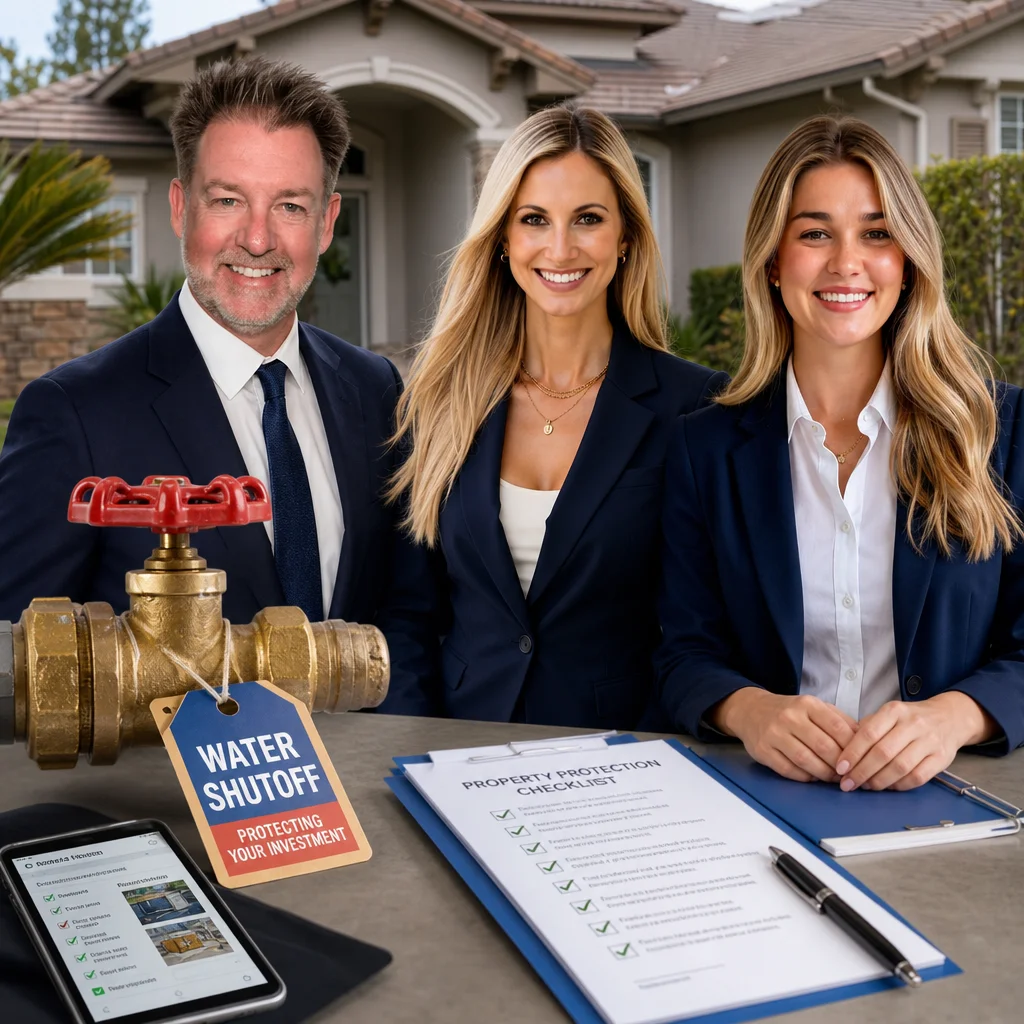
A professional water shutdown is straightforward but requires precision. The main water valve to your rental property gets located, tested, and then shut off to halt all water supply. This eliminates the risk of frozen pipes bursting, leaks developing, or standing water creating mold conditions.
The key difference between a DIY approach and professional service is thoroughness and documentation. When we handle your vacant home water shutdown, we verify that the main shutoff actually stops all water flow by checking every fixture in the property. We inspect for existing leaks, test water pressure, and photograph everything for your insurance records. We also drain remaining water from pipes and traps to prevent freeze damage and bacterial growth.

For Orange County properties facing extended vacancy, this single step removes 90% of water-related risk exposure. It’s particularly effective during winter months when freeze risk peaks, but it’s equally valuable during summer vacancies when properties sit without climate control and pipes can develop pressure issues.
Our Comprehensive Water Shutdown and Property Protection Process
Our approach goes beyond simply turning off a valve. When you need vacant home caretaking services, water management is built into the entire process.
Here’s what our comprehensive water shutdown protocol includes:
- Main water line inspection and pressure testing to confirm current condition
- Proper shutoff valve location, verification, and documentation with photos
- Complete drain-down of remaining water from supply lines and traps
- Trap sealing to prevent sewer gas and pest entry through drains
- HVAC and appliance water line disconnection where applicable
- Written documentation with photos and GPS coordinates of shutoff locations
- Clear labeling of the shutoff valve for emergency access
We schedule this work before extended vacancy actually begins, not after a leak has already started. This proactive timing is crucial. Our team coordinates with you on your specific timeline, whether you’re between tenants, undergoing renovations, or managing a seasonal vacancy.
Real-Time Monitoring and Emergency Response When You’re Away
Shutting off water prevents most damage, but it doesn’t eliminate every risk. Foundation cracks, roof leaks, or HVAC condensation lines can still introduce moisture into a property. This is why we pair water shutdown services with our monitoring protocols.
Our team performs regular property visits during extended vacancy periods. These visits include checking for signs of moisture infiltration, verifying that the water shutoff is holding properly, and inspecting foundation areas for unexpected water entry. If an issue emerges, you’re notified immediately with photos and recommended next steps.
This ongoing oversight catches small problems before they become expensive repairs. A minor foundation seep discovered during a property visit might cost $500 to address, but the same issue left untreated for three months could require $5,000 in remediation work.
Preventing Tenant Disputes and Insurance Claims Through Proper Protocols
Proper water shutdown documentation protects you in multiple ways. If an insurance claim ever becomes necessary, your adjuster will see clear evidence that the property was actively managed and maintained. This documentation typically prevents the 20-30% claim reduction rates that un-maintained vacant properties often face.
From a tenant perspective, this matters when you’re preparing a property for new occupancy. Tenants want to rent from landlords who take maintenance seriously. A property with documented water management protocols and sealed traps signals to prospective tenants that you’re thorough and professional. This helps with lease signing speed and reduces tenant churn down the road.
If a dispute ever arises over water damage or moisture-related issues, your documentation proves you took reasonable precautions. You have dated photos, written reports, and visit logs that demonstrate active property oversight.
The True Property Management Difference in Vacant Property Care
We understand that vacant property management isn’t just about preventing disasters. It’s about maintaining your asset’s condition and protecting your rental income potential. Our approach combines technical expertise with the reliability of a flat-fee model that won’t surprise you with hidden costs.
When we manage vacant homes, you’re not paying extra for each water shutdown visit or monitoring check. Our flat-fee structure means your costs are transparent and predictable, whether we’re conducting one water shutdown or providing ongoing vacant home services throughout a longer vacancy period.
We also connect water management to your broader property preservation strategy. This includes coordinating with our vetted maintenance vendor network if any repairs are needed, tracking property condition through documented visits, and ensuring your home is market-ready when new tenant placement begins.
Seasonal Preparation: Getting Your Rental Ready Before Extended Vacancy
Winter preparation demands different attention than summer vacancy management. As temperatures dip in late fall, we recommend scheduling water shutdowns and drain-downs before cold weather hits. This timing prevents freeze-related emergencies and ensures your property enters the vacant period in stable condition.
Our vacant property preparation process includes an assessment of your specific property’s vulnerabilities. Does your home have exposed pipes in garages or attics? Are there older supply lines prone to pressure issues? Do you have irrigation systems that need winterization? We tailor our approach to your property’s unique risks.
Summer and spring vacancies benefit from different preparation. Stagnant water issues become more urgent when moisture and heat combine. We’ll drain and seal appropriate systems and recommend climate control strategies to prevent mold development during hot, humid months.
Coordinating Water Shutdowns With Our Full Property Management Services
Water management doesn’t exist in isolation. When you partner with us for vacant rental management, water shutdowns coordinate seamlessly with tenant screening, maintenance inspections, and lease preparation.
Here’s how the coordination works in practice: Once you give us notice of an upcoming vacancy, we schedule the water shutdown and drain-down before the previous tenant moves out. Simultaneously, we’re conducting our professional tenant screening and preparing your property for new occupancy. When the water management work is complete, we have a fully documented property ready for inspection. This integrated approach keeps your timeline moving and eliminates gaps where problems could develop.
Our real-time ROI calculator helps you understand exactly how this protection translates to financial benefit. A single prevented water damage incident typically pays for years of preventative water management services.
Peace of Mind With Professional Oversight and Documentation
Documentation is where professional water management proves its value. We provide you with detailed reports that include photos of the main shutoff location, inspection findings, pressure test results, and dates of service. This documentation becomes invaluable if you ever need to file an insurance claim or demonstrate due diligence to a lender or future buyer.

You can access these reports through our client portal anytime, giving you complete visibility into your property’s condition. You know exactly when water management work was performed, what was checked, and what condition everything is in. This transparency reduces stress about whether your vacant property is truly protected.
Insurance companies recognize properties with active professional management as lower-risk assets. Having documented water shutdown services in place often qualifies you for better policy rates or prevents coverage denials when claims become necessary.
Next Steps: Protecting Your Rental Property From Water-Related Losses
If you have a property entering extended vacancy, now is the time to address water management. Reach out to our team to discuss your specific situation. We’ll assess your property’s layout, identify potential water-related risks, and recommend the timing and scope of our vacant home water shutdown services.
Contact True Property Management to schedule a consultation. We’ll walk you through our process, answer questions about how water management fits with your broader vacancy needs, and provide a transparent quote based on our flat-fee model. Your property’s protection starts with a simple conversation about your timeline and concerns.
Don’t wait for a leak to discover the cost of water damage. Preventative water management is the clearest path to protecting your investment, maintaining property value, and ensuring you’re ready for seamless tenant placement when vacancy ends.
Contact Us Today And Schedule Your Free Rent Review and Consultation at 949-688-7705
Frequently Asked Questions (FAQ)
When should we schedule a water shutdown for our vacant rental property?
We recommend scheduling a water shutdown before any extended vacancy period, particularly during winter months when freezing temperatures pose the greatest risk to your pipes. If you’re uncertain about timing, our team can assess your property’s vulnerability and recommend the optimal shutdown window based on seasonal weather patterns and your specific situation.
What happens to our property after we shut off the water?
We don’t just turn off the valve and leave. Our process includes draining all lines, documenting the shutdown with photos and timestamps, and setting up real-time monitoring so you’re alerted immediately if any issues emerge. We also coordinate regular property inspections to catch problems early, and we’re available 24/7 for emergency response if unexpected situations arise.
How does water shutdown coordination work with our other property management services?
We integrate water shutdowns into our comprehensive vacant property care plan, which means our team handles everything from winterization to emergency protocols as one seamless process. You get consistent communication, unified documentation, and the peace of mind that comes from having one trusted partner managing all aspects of your rental’s protection.